Aleo Partners with Utila to Bring Privacy-Preserving Stablecoins to Institutional Wallets


Utila users can now use Aleo's private stablecoins from within their existing wallets.
USDCx and USAD, Aleo's private, programmable stablecoins, are now natively supported in Utila's noncustodial MPC wallets, allowing users to hold both public and shielded balances.
Aleo is Utila's first privacy-focused blockchain partner, combining the privacy that major institutions expect with an onchain user experience they can actually use.
Private stablecoin payments for institutions
Institutions are moving to stablecoins
Privacy aside, stablecoins are already an upgrade over other popular methods for moving money, like cash, PayPal, wire transfers, and Stripe integrations.
Organizations are moving to stablecoins for a number of reasons, including:
- Faster settlement. Value moves in seconds, 24/7, instead of legacy systems that can take days to clear.
- Cross-border without complexity. Fewer intermediaries, less FX drag, and lower fees.
- Lower operational overhead. Processing and reconciliation can be automated more efficiently.
- Programmable money. Automated payouts, batch transfers, and approval rules can be coded into the payment itself.
- Increased dollar access. Pay anyone, anywhere, and access stable currencies in markets where local currency is volatile, or traditional dollars are hard to access.
The privacy gap remains
Due to the limitations of early blockchains, stablecoins were initially created on public protocols. This made it easy to audit financial flows but introduced privacy concerns and increased risk for users.
With traditional stablecoins, every transaction is broadcast to the world. For a business, that means exposing counterparties, salaries, treasury positions, and margins to anyone watching the chain.
That exposure is why institutional adoption has stalled. Privacy isn't seen as a nice-to-have additional feature for finances: it’s a prerequisite that institutions have been waiting for.
Aleo’s private stablecoins close this gap
Aleo is a zero-knowledge financial platform that embeds privacy at the protocol layer, instead of treating it as an add-on. USDCx and USAD are private, programmable stablecoins built on Aleo, with support from Circle and Paxos Labs.
- USDCx: Circle's private, programmable, USDC-backed stablecoin, deployed on Aleo via Circle's xReserve.
- USAD: Aleo's native stablecoin, issued by Paxos Labs and backed 1:1 by USDG, the reserve token of Global Dollar Network.
Utila already processes $15B+ monthly for 400+ institutions across 60 chains. With this latest integration, its ecosystem of users can start easily shielding their financial flows on Aleo.
Enabling compliant privacy with selective disclosure
The obvious question institutional treasury and compliance teams will ask: doesn't shielding a balance undermine the visibility they need for AML and audit purposes?
It doesn't. Being shielded on Aleo was never designed to mean invisible. Because Aleo supports both public and private logic, institutions are given the flexibility needed to meet compliance obligations, with granular control over what information is made public and to whom.
This makes it possible for institutions to build systems with selective disclosure. Account holders and authorized parties, including auditors, regulators, and compliance tooling, retain the ability to prove or reveal specific transaction details on demand, without broadcasting that information to the entire network by default.
For Utila users this limits privacy from public view, while allowing the audit trails, policy controls, and compliance integrations for mainstream business.
"Privacy has been one of the real blockers stopping institutions from running sensitive financial operations onchain. Integrating Aleo into Utila means our clients get the custody infrastructure they're used to alongside the transaction confidentiality their compliance and finance teams actually require." - Bentzi Rabi, CEO and Co-founder of Utila
How to get started
Head to console.utila.io to set up your account, or log in if you're already a Utila customer. From there, Aleo works like any other supported network in your vault. Vaults created before Aleo support was added may need a one-time enablement step by an admin, detailed in Utila's support article here.
Managing public and private balances
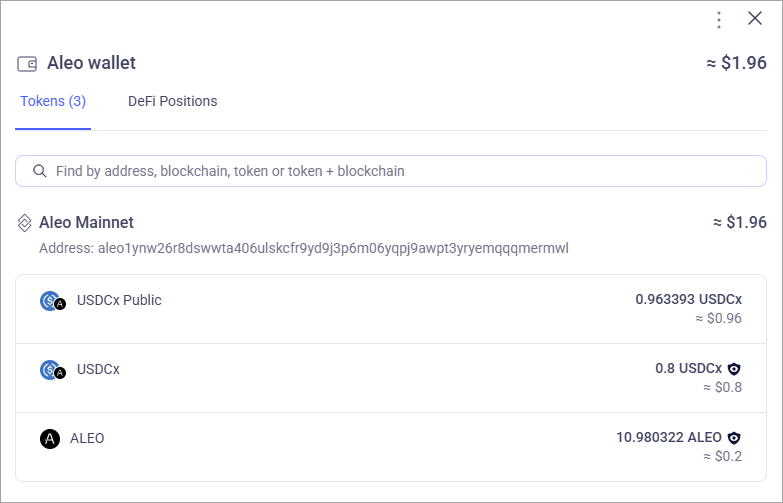
Once Aleo is enabled, USDCx appears as two tokens in your dashboard: a private balance (shielded by default) and a public one, labeled with "Public." This reflects how Aleo works under the hood, where privacy is the default and public visibility is the exception.
Moving between public and private
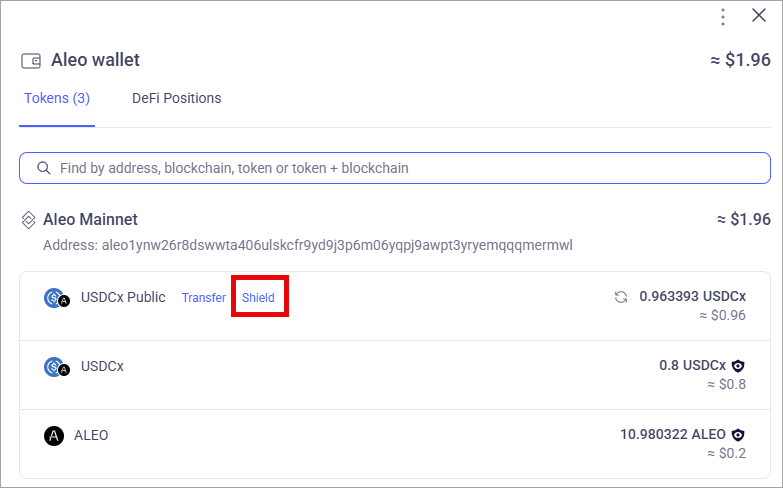
To send shielded funds somewhere that requires a public transaction, like an exchange, unshield them first inside your wallet. To bring public funds back into a private state, shield them the same way. Both actions are fee-sponsored by Utila, so switching privacy modes costs nothing extra.
Sending tokens
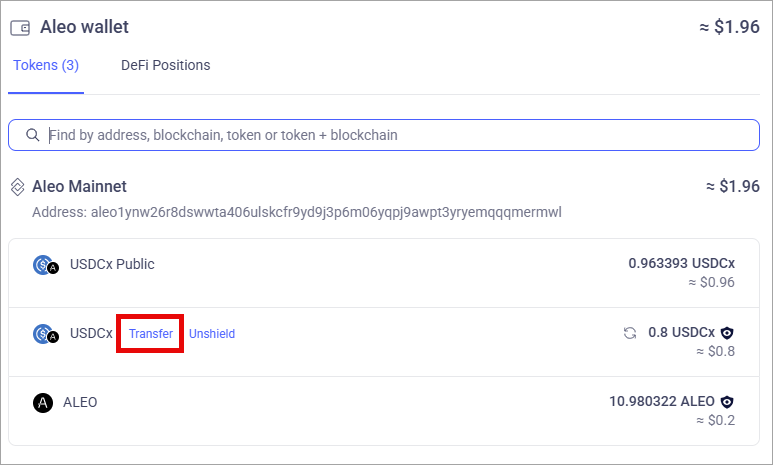
Private transfers are the default when sending USDCx, well suited for payroll, vendor payments, or anything you'd rather keep off public view. Public transfers are for destinations, like exchange deposit addresses, that require a visible transaction.
Dive Deeper
The steps laid out above are similar if you're using Aleo's other private stablecoin USAD, rather than USDCx on Aleo.
For the full walkthrough, including enabling Aleo on existing vaults and consolidating private funds, see Utila's support article.
Want hands-on support? Book a demo with Utila for a custom walk through of how Aleo and Utila can improve your organization’s financial operations.
Utila and Aleo make stablecoin payments private and easy to use for institutions anywhere in the world
Aleo and Utila are making institutional-grade stablecoin privacy accessible, inside wallet infrastructure that hundreds of institutions already use. In short:
- USDCx and USAD are now natively supported in Utila's noncustodial MPC wallets, with support for both public and shielded balances.
- Aleo is Utila's first privacy-focused blockchain integration.
- Stablecoins already deliver faster, cheaper, programmable, borderless payments. Aleo adds the privacy institutions need to actually use them at scale.
- This integration also makes it easier for institutions to meet compliance requirements with selective disclosure, not public ledgers.
Go to aleo.org to learn more about private payments, then head to utila.io to start using them in your organization.